

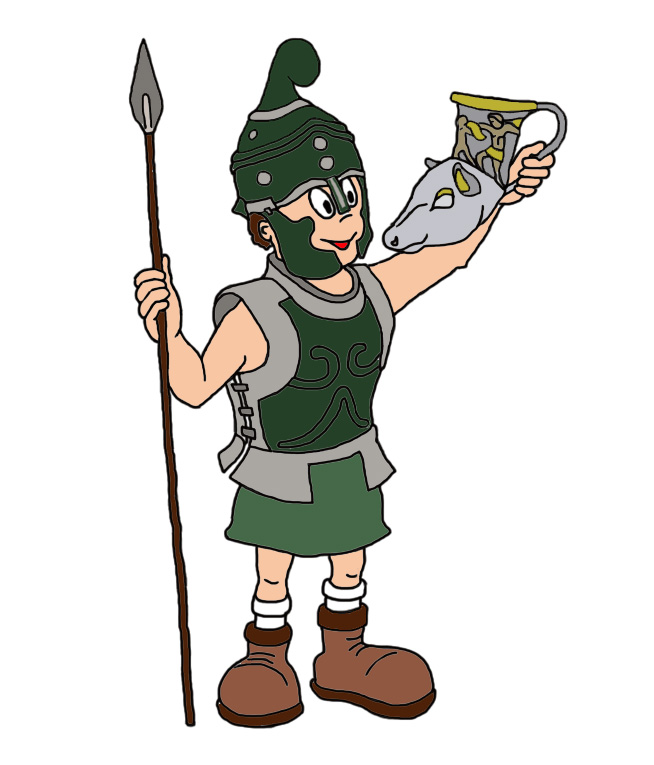

Fearless Warriors
Ancient Greek authors described the Thracians as skilled and fearless warriors. Through constant battles with Greeks, Scythians, Persians, Macedonians, Celts, and Romans, they perfected their combat skills and made warfare their craft. The brave Thracian warriors were highly valued by the Ancient Greeks and Romans, who recruited them as mercenaries for their armies.
The main fighting force in Thrace was the infantry, consisting of peasants. Armed with bows, arrows, slings, and spears, soldiers carried a light crescent-shaped shield called a pelte—the source of their title, peltasts. In cold weather, they wore fox-skin caps, a light tunic belted at the waist (chiton), a colorful woolen cloak (zeira), and boots made of deer hide. Thrace's terrain was ideal for horse breeding, allowing them to also utilize cavalry. Cavalrymen wore the same clothing and carried the same weapons as infantrymen, except they did not use slings. Thracian rulers also deployed heavy artillery, including catapults and stone-throwing machines. To defend their territories, Thracian kings constructed fortified settlements and military fortresses.
Thracian rulers had numerous armies at their disposal. The Greek historian Thucydides recounts that during King Sitalces' grand campaign against Macedonia in 429 BC, his army numbered 100,000 infantry and 50,000 cavalry. The political power and wealth of the Thracian aristocracy were reflected in their impressive weaponry—helmets, armor, breastplates, greaves, swords, and daggers—commissioned from local and foreign craftsmen. These exquisite pieces were made of gold and silver, or bronze with gilding and silver plating, and decorated with images of gods and goddesses, legendary rulers, and mythical creatures from Thracian mythology. Placed in the tombs of noble Thracians to serve them in the Afterlife, they symbolized royal and aristocratic authority.